We celebrated Dr. Martin Luther King Jr. in first grade by learning about his life and work. After listening to stories and video clips about Dr. King, we wrote about what we learned. We wrote a paragraph focusing on the main idea, supporting details and a closing sentence. We drew a picture of Dr. King. Then we scanned the picture and used Jing to record our voices as we read our paragraphs. We are posting some today. We will post more this upcoming week. Enjoy them!
Visit us next week for more about Dr. Martin Luther King Jr.!
We would love to know how Dr. King has influenced your life. Please add comments below!

Saturday, January 25, 2014

Saturday, January 18, 2014
More from the week of January 13th
One of the highlights of our week was the graphing/store project mentioned in our previous post. Here are a few other things that we have been working on. We have been learning about verbs. Each student made a list of ten verbs that tell what they like to do. Then they made a wordle Here is one of the 'wordles'.

We learned a lot about Dr. Martin Luther King Jr. (In fact next week we will feature our Dr. King paragraphs!) We learned what it means to be a peacemaker. Here a couple of our peace doves.


In science we completed an experiment on chromatography. We learned what happened to black ink on a paper towel strip as water passed over it. We saw how the black ink was composed of many beautiful colors. You can see more of this at our upcoming science fair! Here are our before and after pictures. The students enjoyed this experiment.


Another project that the students enjoyed was making the paper plate fish. We learned about the first four apostles Jesus called. We learned that Jesus called them to "fish" for people. The fish we made remind us of our call to be followers of Jesus.

We would love to know what you think about our work!
Friday, January 17, 2014
Graphing and Stores
We were given a problem to solve in math. We had to create a store and find 3 items to sell in it. We worked with partners to create our store. Then we picked 5 possible items to sell. We polled 13 people to see which were the most popular. We graphed our results. Then we analyzed our graph to select the three most popular items. Some of us had ties so we had to choose the third item. You can see our graphs, which we made on Kidspiration. You can listen to us analyze our graphs.
We hope you enjoyed listening to us discuss our graphs!
What do you think about our graphing projects? We would love to know!
We hope you enjoyed listening to us discuss our graphs!
What do you think about our graphing projects? We would love to know!
Saturday, December 21, 2013
The Advent seasons ends and Christmas break begins
We had a wonderful December! We enjoyed our "Christmas Around the World" unit. We were able to look at the Christmas traditions from 5 countries. We visited: Mexico, Italy, Germany, Sweden and the Philippines. We learned how to say Merry Christmas in each language. We learned about the holiday foods and practices. We are able to locate the country on the map and identify its flag. You may have looked at our previous posts to see the ornament we made for each country. Each country had a "tree" outside our room. As we prepared to leave for the Christmas break, we each made our own tree and put the 5 ornaments on it. This way we could take them home. Here is what some of them looked like.


We also worked on nativity scenes this week. They turned out really well! Here are some:


The Nativity figures came from The Daughters of Saint Paul.
We would like to wish you all a very Merry and Blessed Christmas!
As our German friends would say: Frohe Weihnachten!
As our Swedish friends would say: God Jul!
As our Mexican friends would say: Feliz Navidad!
As our Italian friends would say: Buon Natale!
As our Philippine friends would say: Maligayang Pasko!
To all of our readers, we will see you in the New Year!
Wednesday, December 18, 2013
Christmas in Italy
We learned a lot about Christmas in Italy. We learned that the nativity scenes were started by St. Francis in Italy. We also learned that Shepherds come down from the mountains and play bagpipes around Christmas. Here are some more things that we learned:
Christmas Traditions Around the World and Our Lady of Guadalupe
The students wrote and recorded our news update.
We continue to learn about Christmas traditions around the world. We visited Germany to learn of German Christmas traditions. Here is what we learned:
After going to Germany we traveled (virtually) to Sweden. In Sweden this is what we learned: We also had a visitor come in and share with us her Swedish Christmas traditions. She showed us the following ornaments.


 Then we went back to Mexico on December 12th to learn about Our Lady of Guadalupe. Stay tuned to learn about Christmas in Italy and the Philippines!
(St. Lucia doll came from the Paper Dali.)
We continue to learn about Christmas traditions around the world. We visited Germany to learn of German Christmas traditions. Here is what we learned:
After going to Germany we traveled (virtually) to Sweden. In Sweden this is what we learned: We also had a visitor come in and share with us her Swedish Christmas traditions. She showed us the following ornaments.


Friday, December 6, 2013
Weekly Highlights
This week we thought we would try something new. We worked in teams to create four news reports. The reports are about one thing that we learned this week. The week was exciting. We began our Christmas around the world unit. We learned a lot about Advent and St. Nicholas. Here are some items that we found interesting.
Questions for our readers: Have you ever been to Mexico around Christmas time? If so, what was it like? How do you celebrate advent? Have you ever read Imogene's Antlers? If so, did you like the book? What special things do you do to get ready for Jesus' birthday?
Questions for our readers: Have you ever been to Mexico around Christmas time? If so, what was it like? How do you celebrate advent? Have you ever read Imogene's Antlers? If so, did you like the book? What special things do you do to get ready for Jesus' birthday?
Tuesday, November 26, 2013
The Most Interesting Things We Learned in our Thanksgiving Unit
Here are some of the interesting things we learned during our Thanksgiving Unit!
L--I learned that Wampanoag homes were shaped like a dome.
A--The Wampanoags used animal bones to make jewelry.
Ry--The Wampanoags made jewelry out of bones and seashells.
S--The Pilgrim houses were shaped like a rectangle.
D--The Wampanoags made their clothes from deer skin.
E--The Wampanoags painted designs on their body.
G--The Pilgrim girls wore a lot of clothes.
Mi--The Wampanoag put designs on their clothes.
MK--The Pilgrims wore fancy clothes.
C--The Wampanoag wore the coat inside out to stay dry.
O--The Wampanoag taught the Pilgrim how to grow corn.
Ma--The Pilgrims had a hard time finding food. The Wampanoag helped them.
Ri--The Wampanoag helped the Pilgrims to grow corn in their garden. They planted fish with the corn.
What do you know that is interesting about the Pilgrims or Wampanoags?
Our Thanksgiving Unit
We learned a lot about Thanksgiving. We learned about the Pilgrims trip on the Mayflower. We also learned a lot of Mayflower facts. We each wrote a fact that we learned on a Mayflower ship. (Template from http://www.everythingesl.net/lessons/gobble.php) Here are a couple of our ships.


We also wrote opinion pieces. We wrote what it would be like to be on the Mayflower. We stated our opinion and wrote reasons to support our opinion. We did this on a postcard from the Mayflower.


We learned about Pilgrim and Wampanoag homes. We made a Pilgrim home and a Wampanoag home, called a wetu.


The Pilgrim homes are more rectangular and the Wampanoag homes are dome-shaped.
Then we learned about the Wampanoag and Pilgrim food. The Wampanoag helped the Pilgrims to find all the best food.


Then we learned about Pilgrim and Wampanoag clothes. We decorated paper dolls to look like Pilgrims and Wampanoag girls.

Finally we wrote paragraphs about either the Wampanoags or the Pilgrims. We will read some of these to you, so stay tuned!


We also wrote opinion pieces. We wrote what it would be like to be on the Mayflower. We stated our opinion and wrote reasons to support our opinion. We did this on a postcard from the Mayflower.


We learned about Pilgrim and Wampanoag homes. We made a Pilgrim home and a Wampanoag home, called a wetu.

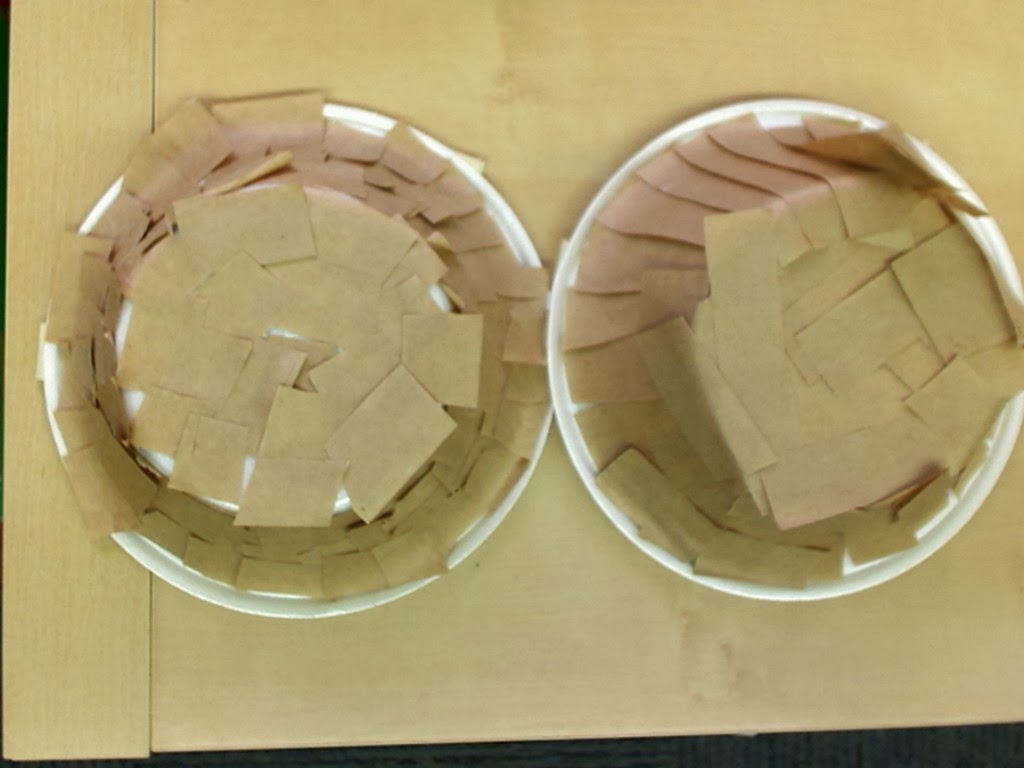
The Pilgrim homes are more rectangular and the Wampanoag homes are dome-shaped.
Then we learned about the Wampanoag and Pilgrim food. The Wampanoag helped the Pilgrims to find all the best food.


Then we learned about Pilgrim and Wampanoag clothes. We decorated paper dolls to look like Pilgrims and Wampanoag girls.


Finally we wrote paragraphs about either the Wampanoags or the Pilgrims. We will read some of these to you, so stay tuned!
Monday, February 11, 2013
Our Unit on China
We just finished an educational unit on China. We learned so much! We learned to find China on the map. We can identify the Chinese flag. We learned about some animals in China. We also learned about Chinese inventions and culture. We are posting some of our activities. Here is a photostory that we completed.
We also made an over-sized "travel brochure". Each person researched a part of Chinese culture. From the research we made this brochure that looked at places, people, inventions and animals.

We also learned about the Lantern festival and made lanterns in art class.

We also learned about Chinese calligraphy. In art class we practiced writing with Chinese calligraphy.

We learned about the importance of dragons, the color red, the emphasis on good luck. Check out our dragons. (We got the idea from Scholastic.)

We had a guest speaker come in and talk to us about her visit to the Great Wall of China. She gave us postcards to create. We put the postcards around our own great wall that we made in art class.


We read a lot of stories from China. We read 'Grandfather Tang's Story'. The story is about tangrams. We had fun with our own tangrams.


Some of our class mates brought in some Chinese items that they had at home.


The unit on China was so much fun! It was a great way to integrate ELA, math, writing, social studies and art!
Here is a picture of our guest sharing her visit to the Great Wall of China!

What is the most interesting fact that you know about China?
Thursday, February 7, 2013
Learning About Maps and Models
We are learning about maps and models as we get ready to read a story about maps. We were going to share information with our classmates about what we learned. Then one of our students said, "Let's put it on our blog!" (I am thrilled that they want to use the blog to share their knowledge and to see what others think!) So here is what we learned:
A map is like a model except it is flat and easier to lift. -A.M.
Maps are made from paper that you can draw. M.T.
You could make a map on paper and it is flat. C.G.
Some maps show the world. K.G.
A long time ago America was not on the map. L.S.
People thought the world was flat. I.M.
Models can be made into maps. E.M.
There are four oceans: Atlantic, Pacific, Indian, an Arctic Oceans. C.G.
A model is a small version of something that is real. A.R. &T.B.
There are 7 continents: Asia, Antarctica, Europe, North America, South America, Australia and Africa. (all of us)
Christopher Columbus sailed across the ocean because he thought he could get to Asia that way. C.T.
Columbus landed in the Americas. E.M.
We wonder what do you know about maps?
How do you use maps?
Thursday, January 31, 2013
Villa Maria We Love You!
We had a wonderful Catholic Schools Week celebration! We enjoyed a magician, a school volleyball game, a spelling bee, ice cream sundaes and more! During the week we took time to write words that describe Villa. We had so much fun with our name Wordles, we decided to make Villa Wordles. Here are a few:


And. . .
What words would you use to describe Villa?


And. . .

What words would you use to describe Villa?
Tuesday, January 29, 2013
Awesome Adjectives!
After using adjectives in our outer space stories, we decided to have some more fun. We each thought of 10 adjectives about ourselves. Then we used the Wordle site to make Wordles about us! Check out this wordle:


Outer Space
We learned about outer space. Here are some of the things that we thought were interesting:
The moon reflects the sun's light. C.T.
The stars are bigger than the planets. J.B.
The moon is smaller than the earth. M.T.
The moon is 1/4 the size of the earth. I.M.
There is nothing to protect the moon from things crashing into it. K.G.
Saturn has rings around it. S.D.
The Earth is made of land, air and water. T.B.
Pluto is a dwarf planet. A.R.
The sun is a star. J.N.
The moon has no air. A.M.
Some of Saturn's rings are made out of ice. L.S.
Uranus spins on its side. C.G.
The stars are gases. F.D.
We were also learning about adjectives in ELA. So, we decided to write a story about taking a rocket to outer space. Our story had to have adjectives in it. Here are a couple of our stories and rockets.


Here is our question to you, "Do you know an interesting fact about space that you would like to share with us?
Friday, January 18, 2013
Place Value is Snow Much Fun
We learned about place value. One thing we did was make place value snowmen. We each got a number. We showed the number with tens blocks and ones blocks. Then we wrote the number of tens and ones. Then we wrote an addition sentence. We put it all on a snowman. We had fun!
How do you use place value?
This blog post is by I.M.


How do you use place value?
This blog post is by I.M.


Subscribe to:
Posts (Atom)